Community Support

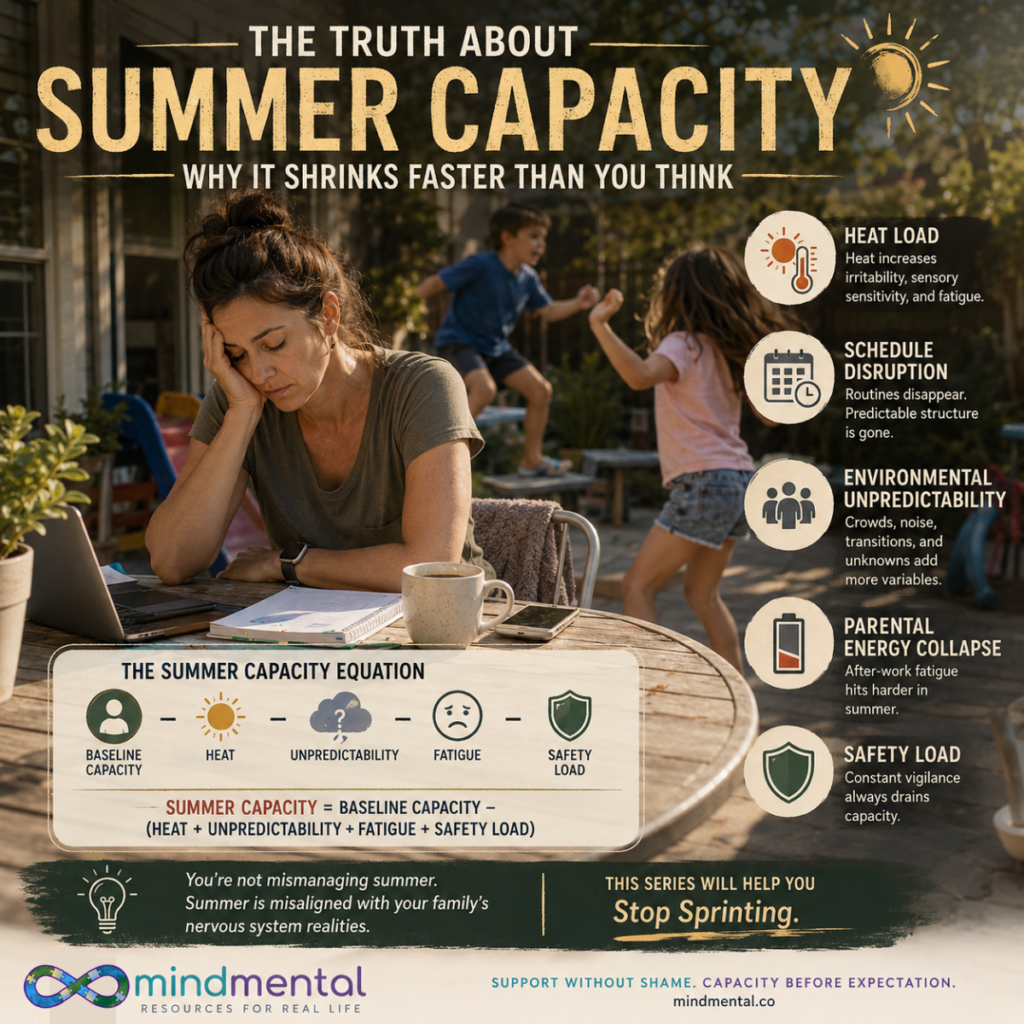
Infographic explaining why summer reduces capacity, showing a tired parent working outdoors while children play behind them, with icons illustrating heat load, unpredictability, fatigue, and safety demands.

The Truth About Summer Capacity: Why It Shrinks Faster Than You Think

Summer looks expansive on paper – longer days, flexible schedules, “more time.” But for military and neurodivergent families, summer capacity often shrinks, not expands it. Summer is sold to parents as the season of freedom. More daylight. Fewer schedules. Room to breathe. But if you’re raising a neurodivergent child, solo parenting through a deployment, mid-PCS […]

The Truth About Summer Capacity: Why It Shrinks Faster Than You Think Read More »

A military family stands at a crossroads with multiple labeled paths—EFMP, TRICARE, Peer Support, and Crisis Line—symbolizing the challenge of navigating support systems not built for their needs.

Finding Support When the System Wasn’t Built for You: A PTSD Resource Guide for Military Families with Neurodivergent Children

This is the final article in our June PTSD Awareness Month series. All month we have named things that do not get named often enough. Secondary traumatic stress in military spouses. PTSD in parents of autistic children. The trauma that military kids carry without anyone calling it trauma. Caregiver fatigue that goes so deep it

Finding Support When the System Wasn’t Built for You: A PTSD Resource Guide for Military Families with Neurodivergent Children Read More »

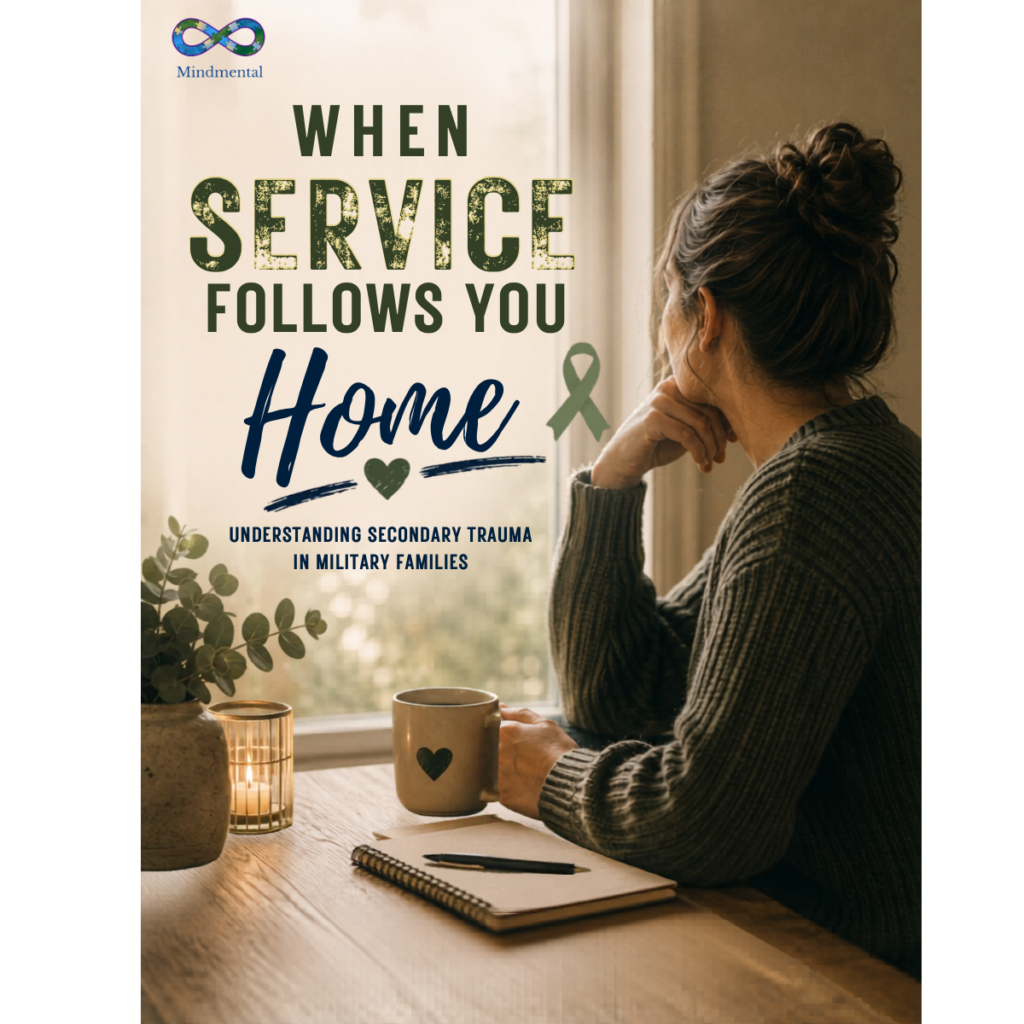
A mental health awareness poster showing a person in military uniform leaving home while another person sits on a couch holding a mug. The scene highlights the emotional impact of service on families and promotes understanding of secondary trauma and PTSD awareness.

When Service Follows You Home: Understanding Secondary Trauma in Military Families

There is a version of this story that gets told often. The service member comes home changed. The family adjusts. Time passes. Things get better – or they do not. Either way, the story centers the veteran, the diagnosis, the individual who served. What that story leaves out is everyone else in the house. The

When Service Follows You Home: Understanding Secondary Trauma in Military Families Read More »

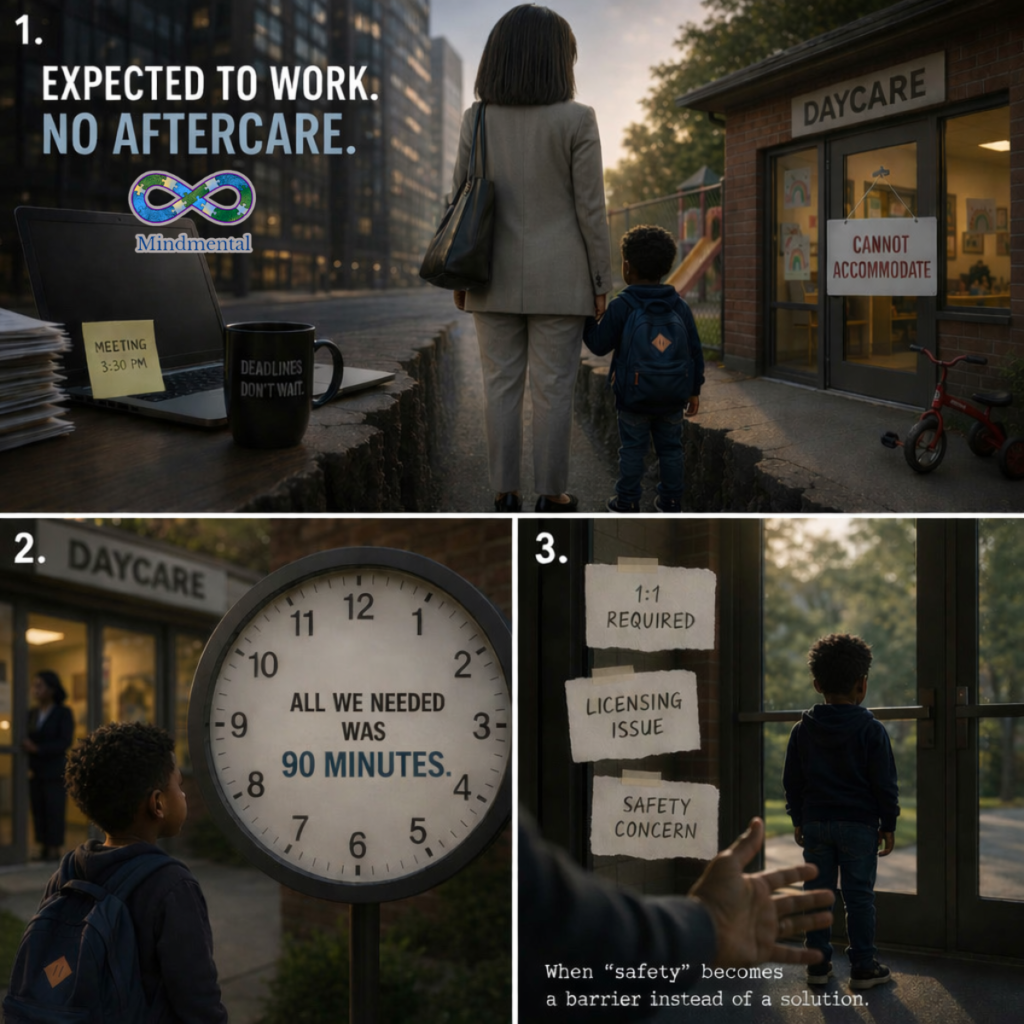
Three-panel illustration of working parent facing childcare exclusion. Panel 1: Parent in business attire with child approaching daycare displaying "CANNOT ACCOMMODATE" sign, desk shows work deadline. Panel 2: Clock reading "ALL WE NEEDED WAS 90 MINUTES." Panel 3: Child at window with notes showing shifting excuses (1:1 required, licensing issue, safety concern). Caption: "When 'safety' becomes a barrier instead of a solution."

The Childcare Exclusion Crisis No One Is Talking About

When I returned to an office role this spring, we reached out to the daycare our youngest had attended for a full year before the pandemic disruptions, before essential academics became our rhythm. We hadn’t re-enrolled back then because he was aging out of the pull-up-friendly classrooms and wasn’t yet fully potty trained. But now,

The Childcare Exclusion Crisis No One Is Talking About Read More »

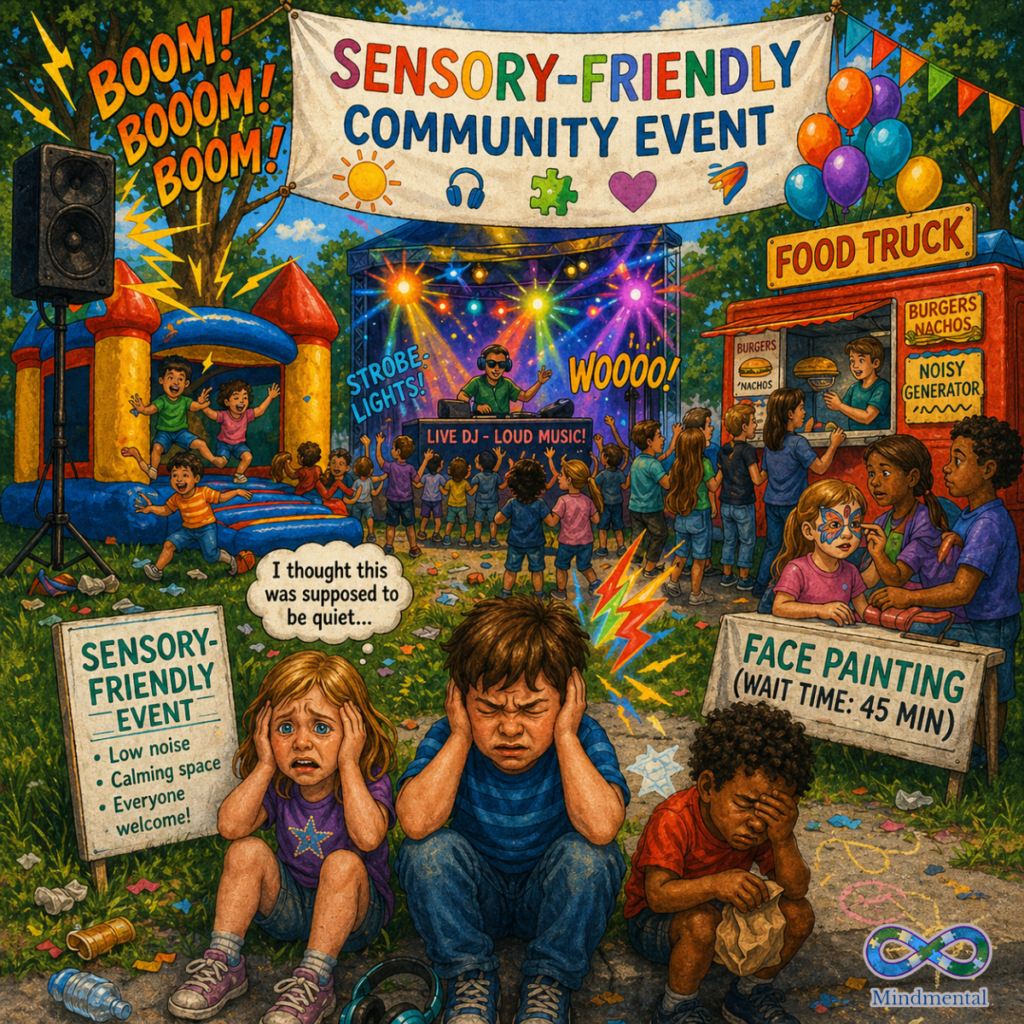
Illustration contrasting "sensory-friendly event" signage with overwhelming reality. Banner reads "Sensory-Friendly Community Event" with icons of headphones, puzzle pieces, and hearts. Background shows loud DJ with strobe lights, bounce house, noisy food truck generator, and balloons. Foreground shows three distressed children sitting on ground covering their ears. One child's thought bubble reads "I thought this was supposed to be quiet." Sign nearby lists promised features: "Low noise, Calming space, Everyone welcome." Face painting booth shows 45-minute wait time.

When Sensory-friendly Isn’t Sensory-friendly: A Call for Better Community Planning

As Autism Awareness and Acceptance Month comes to a close, many communities proudly highlight their “sensory-friendly” events – spaces meant to welcome autistic children, neurodivergent families, and anyone who benefits from reduced sensory load. But too often, what’s advertised as sensory-friendly ends up looking like the scene so many families know too well: booming speakers,

When Sensory-friendly Isn’t Sensory-friendly: A Call for Better Community Planning Read More »