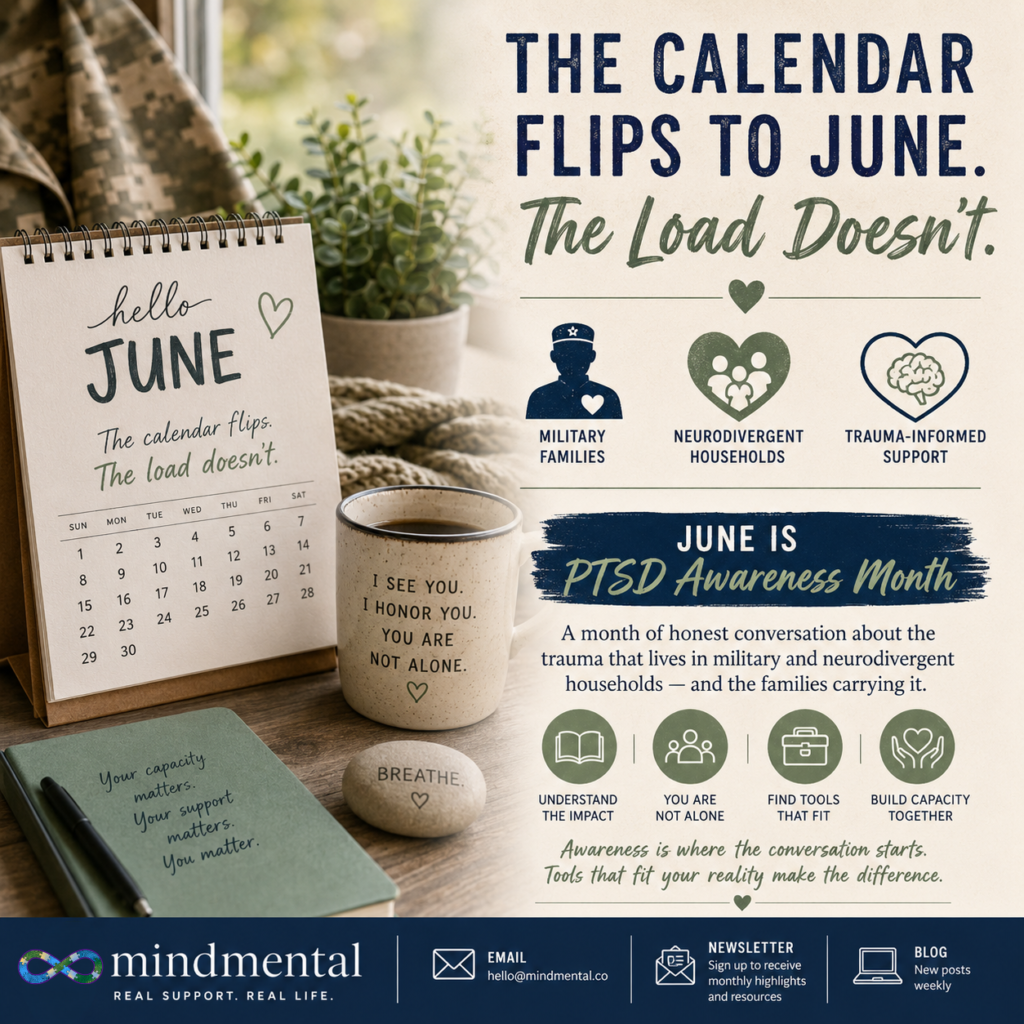
May gave us language.
It gave us permission slips, awareness ribbons, and 31 days of conversation about mental health. For military families and neurodivergent households, it gave us something rarer: a cultural moment where the invisible weight you carry every day was at least being named in the broader conversation.
And now it’s June.
The awareness month ends. The hashtags slow down. The content shifts. And you are still here – same load, same nervous system, same family – on the other side of a calendar flip that changed nothing about your daily reality.
But June is not empty.
June is PTSD Awareness Month. And if you are a military spouse, a caregiver of a neurodivergent child, or a parent holding a household together through deployments and transitions – this month belongs to you too.
The Gap Between Awareness and Action
Here is what awareness months do well: they open doors.
They give people language for experiences they have been carrying without words. They create permission to talk about things that usually go unspoken. They remind communities that they are not alone in what they are navigating.
Here is what awareness months do not do: they do not hand you tools. They do not build the support systems that are missing. They do not follow you into June with something to hold onto.
That gap – between naming the thing and having resources that actually fit your life – is exactly where Mindmental lives.
May asked us to see our mental health more clearly. June is asking what we do with that clarity.
What PTSD Awareness Month Means for Families Like Yours
When most people hear “PTSD,” they picture a veteran. A combat experience. A formal diagnosis.
What that picture leaves out is the military spouse who learned to read the room before walking through the door. The parent of an autistic child whose nervous system has been responding to crisis after crisis without a break. The child who stopped asking for things on hard days because they could feel the tension before anyone said a word.
PTSD – and trauma more broadly – does not require proximity to a battlefield.
It requires proximity to pain. Sustained, unaddressed, and unsupported.
Military families live in that proximity regularly. And they deserve a full month of honest conversation about it.
What’s Coming in June
This month, Mindmental is publishing a dedicated series on PTSD and trauma as they show up specifically in military and neurodivergent households. Not the version that centers only the veteran’s experience. The version that accounts for everyone in the house.
Here is what’s coming:
When Service Follows You Home: Secondary Trauma in Military Families How PTSD in a service member ripples through the entire household – and why spouses, children, and caregivers deserve to have their experience named.
My Kid Wasn’t There, But They Still Carry It Children of service members can develop trauma responses from deployment cycles, frequent moves, and the emotional weight of a household under stress – even without direct exposure to combat.
You Can’t Pour From an Empty Cup: PTSD Caregiver Fatigue Is Real For the military spouse doing double duty as parent, caregiver, household manager, and support system. No performance required.
And more throughout the month – because this conversation is bigger than 30 days, and your reality deserves more than a hashtag.
A Permission Slip for the Transition
Before June begins in full, take a moment here.
You just moved through two awareness months. April asked you to advocate more clearly for your child. May asked you to extend grace to yourself. Both of those things take energy – and energy, as we have established, is not unlimited.
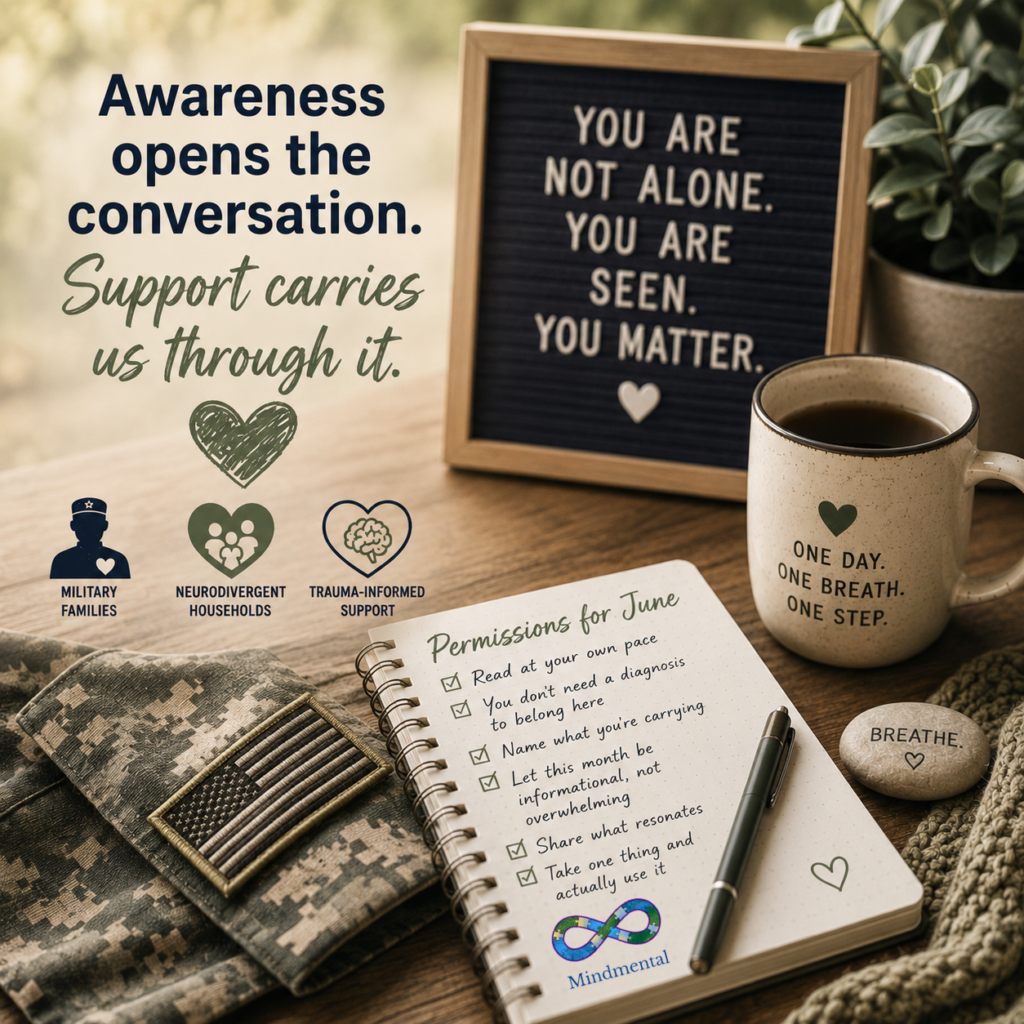
Here are the permissions you may need as you move into June:
☐ Permission to read this month’s content at your own pace – not all at once, not as homework
☐ Permission to recognize yourself in the PTSD conversation without needing a formal diagnosis
☐ Permission to name what your household has been carrying, even if no one else has named it
☐ Permission to let June be informational, not overwhelming
☐ Permission to share what resonates with someone who needs it
☐ Permission to take one thing from this month and actually use it
The Through Line
April. May. June.
Three months of awareness that, for military and neurodivergent families, point to the same truth from different angles:
The load is real. The systems are insufficient. The people carrying the most are often the last ones supported.
Awareness is where the conversation starts. Capacity is where we live. And tools that actually fit your reality are what make the difference.
That is what this month is about.
What Comes Next
The first piece in our June PTSD series publishes this week:
“When Service Follows You Home: Understanding Secondary Trauma in Military Families”
If you have ever found yourself managing someone else’s trauma responses while quietly accumulating your own – this one is for you.
What are you carrying into June that May didn’t have language for? Name it in the comments. You are not alone in it.
Mindmental creates trauma-informed, capacity honoring resources for military families, neurodivergent households, and anyone navigating complex seasons of life. Built with lived experience. Backed by professional expertise. Designed for your reality.
This article is for informational and awareness purposes. It is not intended to diagnose or replace professional mental health support. If you are experiencing significant distress, please reach out to a qualified professional or someone you trust.
Did you miss the Military Family Mental Health Goals That Actually Matter article?
Let’s Connect
When we center experience, support becomes inclusive and cultivates belonging.
Email: hello@mindmental.co
Newsletter: Sign up to receive monthly highlights and resources
Blog: New posts weekly
Follow me on LinkedIn and Facebook for more resources and real time updates!
Important Note: I am not a licensed therapist or counselor and I do not provide clinical mental health services. Mindmental offers educational resources, organizational tools, and community support based on professional experience and lived expertise. For clinical care, please contact a licensed provider.