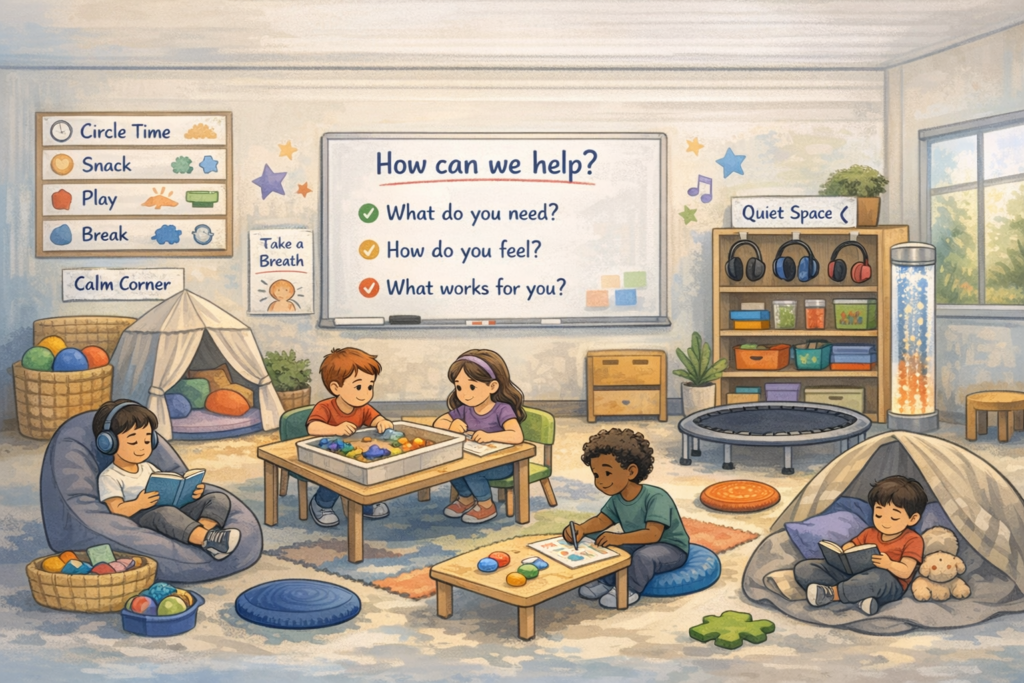
Support Without Labels: A Needs-Based Approach for Programs Serving Diverse Learners
Military families are asked to explain their children over and over again – at every new duty station, every new school, every new provider. And too often, the first question they face is a label‑based one:
“Does your child have special needs?”
For many families, that question doesn’t fit their experience. Their child may need support with focus, transitions, sensory regulation, communication, or learning – but they may not have a diagnosis, may be waiting for one, or may not feel safe disclosing it.
As a mental health professional and military spouse who has supported families across multiple installations, I’ve seen how often labels become barriers instead of bridges. Not because labels are bad, but because they’re asked for in moments when families are simply trying to access help.
There is a better way – one that centers needs, not labels, and creates safer, more inclusive pathways to support.
Over the years, I’ve seen both sides of this as a parent. Some programs welcomed my children by asking about what helped them thrive – interests, sensory needs, communication styles. Others relied so heavily on labels or assumptions that they missed who my child actually was. Those experiences shaped why I teach needs‑based language today: because support should begin with understanding, not categorizing.
Why Language Matters for Military Families
Military families already navigate enough complexity:
- Frequent moves that disrupt continuity of care
- Varying state and installation resources
- EFMP enrollment with permanent military records
- Privacy concerns about documented diagnoses
- Fear that support needs could affect assignments
When program language emphasizes labels over needs, families face an impossible choice:
Share the diagnosis → Risk stigma, documentation, assumptions
Don’t share → Miss critical support, struggle silently
There’s a third option: needs-based language that focuses on what helps.
What Needs-Based Language Looks Like
Instead of organizing support around diagnoses, organize around what families are navigating.
Instead of This:
“ADHD Parent Support Group”
Try This:
“Support for families navigating focus and attention challenges, executive function differences, and school advocacy for attention-based needs”
Instead of This:
“Special Needs Childcare”
Try This:
“Childcare for children who benefit from sensory-friendly environments, flexible routines, and staff trained in diverse learning styles”
Notice the shift:
The first approach says, “If your child has X diagnosis, come here.”
The second approach says, “If your family is navigating Y experience, we can help.”
One requires a label to belong. The other recognizes shared experiences.
Real-World Examples
FRG Event Announcements
Label-First:
“Special needs family playdate this Saturday”
Needs-Based:
“Family playdate with sensory-friendly activities, flexible schedules, and understanding of different communication styles. All families welcome.”
EFMP Outreach
Label-First:
“Join our support group for families with special needs children”
Needs-Based:
“Navigating therapy appointments, school meetings, or medical coordination? Connect with other military families managing similar challenges.”
Intake Questions
Label-First:
“Does your child have special needs? Yes/No”
Needs-Based:
“What supports or accommodations help your child thrive?”
When Labels ARE Helpful
Diagnostic labels serve important purposes. They can:
✓ Connect families to research and evidence-based interventions
✓ Unlock services and legal protections
✓ Provide community and validation
✓ Guide treatment planning
The key: labels should be tools families can choose to use, not gates they must pass through to access support.
Quick Language Reference
| Instead of This | Try This |
|---|---|
| Special needs | Additional support needs |
| Disabled child | Child who benefits from accommodations |
| Does your child have special needs? | What helps your child feel successful? |
| Special needs parents | Parents navigating additional support coordination |
| High-functioning / Low-functioning | Describe specific strengths and support needs |
Why This Matters During PCS Moves
Military families move every 2-3 years. Every move means:
- New doctors who need background
- New schools requiring disclosure
- New support systems to navigate
- New judgments about their child
When communities lead with labels, families must repeatedly prove needs are real and overcome assumptions.
When communities lead with support, families can focus on what helps and connect based on shared experience.
That difference matters — especially for families already managing deployment stress, assignment uncertainty, and constant transition.
Start Here: Three Things to Change Today
1. Replace one program title
From: “Special Needs Family Event”
To: “Family Event with Sensory-Friendly Activities and Flexible Structure”
2. Revise one intake question
From: “Does your child have special needs?”
To: “What supports or accommodations help your child thrive?”
3. Update one event description
Add specific supports offered instead of saying “special needs welcome”
Small shifts create big change.
A Final Thought
When my oldest son was isolating in social groups or just wanting to run in circles at recess, I didn’t have language for what we were experiencing. “He likes to be by himself, but will join in if asked by an adult,” didn’t fit the forms. It took years to find the words.
As I began working with military family programs, I saw this same struggle multiplied: families navigating diagnoses across duty stations, in local communities, filling out the same forms at every program, starting over with providers who needed “the label” to understand the need.
Language shapes how children see themselves.
When support is framed as “for kids like you” (with the diagnosis), it can feel othering.
When support is framed as “because your brain works this way,” it builds understanding.
All children deserve support that fits how they learn, communicate, and experience the world.
Labels can be part of that story — but they don’t have to be the opening line.
This article reflects current best practices in needs‑based language while centering family experience and respecting their choices.
Acronyms Used in This Post
- ADHD — Attention‑Deficit/Hyperactivity Disorder
- EFMP — Exceptional Family Member Program
- FRG — Family Readiness Group
- PCS — Permanent Change of Station
Let’s Connect
When we center experience, support becomes clearer-and kinder.
Email: hello@mindmental.co
Newsletter: Sign up to receive monthly highlights and resources
Blog: New posts weekly
Follow me on LinkedIn and Facebook for more resources and real time updates!
Important Note: I am not a licensed therapist or counselor and I do not provide clinical mental health services. Mindmental offers educational resources, organizational tools, and community support based on professional experience and lived expertise. For clinical care, please contact a licensed provider.
© 2026 Mindmental. All rights reserved.