A group of educators sits around a table reviewing documents, with a clipboard showing a checklist in the foreground. Text reads “Know Your IEP Rights Before You Sit Down.”

5 Things Every Parent Should Know About IEP Meetings

5 Things Every Parent Should Know About IEP Meetings If you’re a parent navigating the IEP process, you know the meetings can feel intimidating. There’s a table full of professionals: teachers, administrators, specialists, and you’re trying to advocate for your child while also understanding a system that seems designed to confuse rather than clarify. I’ve […]

5 Things Every Parent Should Know About IEP Meetings Read More »

Illustration of a parent and child meeting with a teacher in a classroom. The teacher is gesturing dismissively while saying "I don't need that, I've already been doing those accommodations." The parent appears frustrated, standing protectively near their child. The scene depicts a common IEP or 504 meeting dynamic where parents face resistance when requesting formal support.

The “I’m Already Doing That” Problem: IEP Accommodations

When Teachers Say “I’m Already Doing That”: What It Really Means and What to Do About It You’re sitting in an IEP meeting. You’ve come prepared – binder organized, data printed, accommodations researched. You ask for something your child needs. Extended time on tests. Preferential seating. Visual schedules. Breaking assignments into chunks. And the teacher

The “I’m Already Doing That” Problem: IEP Accommodations Read More »

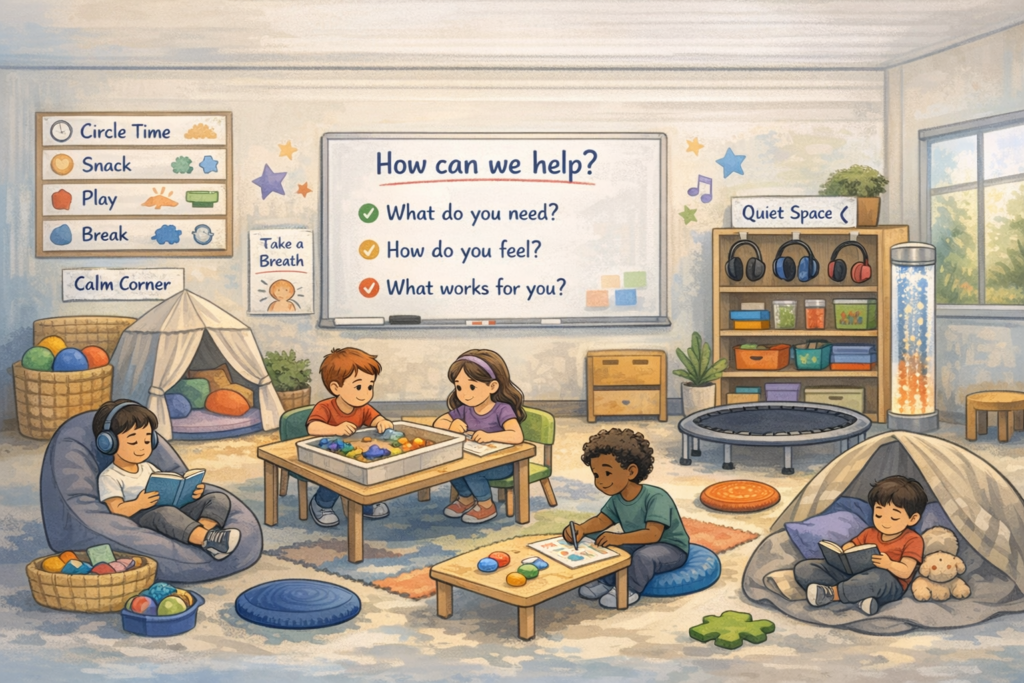
An inclusive elementary classroom with sensory tools, flexible seating, and a central whiteboard asking “How can we help?” Children engage in reading, drawing, and sensory play in a calm, neurodiversity-affirming environment.

Support Without Labels: A Needs-Based Approach for Programs

Support Without Labels: A Needs-Based Approach for Programs Serving Diverse Learners Military families are asked to explain their children over and over again – at every new duty station, every new school, every new provider. And too often, the first question they face is a label‑based one:“Does your child have special needs?”For many families, that

Support Without Labels: A Needs-Based Approach for Programs Read More »

Mother comforting frustrated child struggling with homework at table, military family photo on wall, warm evening lighting illustrating learning disability challenges

When “Wait and See” Means “Wait and Struggle”: What Military Families Need to Know About Learning Disability Detection

When “Wait and See” Means “Wait and Struggle”: What Military Families Need to Know About Learning Disability Detection As a military spouse and mother navigating the complexities of special needs in military life, I’ve learned that some of our biggest challenges come not from what TRICARE covers, but from the gaps families must navigate on

When “Wait and See” Means “Wait and Struggle”: What Military Families Need to Know About Learning Disability Detection Read More »

A young boy in a teal hoodie and backpack tells his mother, “I went for dyslexia.” They stand in a warm, cozy room with bookshelves and a window. The mother smiles gently, listening with care. Title text reads: “He Said Dyslexia: When Our Kids Name What We Haven’t Explained Yet.”

“He Said Dyslexia”: When Our Kids Name What We Haven’t Explained Yet

“He Said Dyslexia”: When Our Kids Name What We Haven’t Explained Yet My son usually tells me he went to “the office for reading.” It’s a phrase we’ve both come to accept – gentle, neutral, supportive. But one day, he said something different. “I went for dyslexia.” He said it like it was just another

“He Said Dyslexia”: When Our Kids Name What We Haven’t Explained Yet Read More »

Couple sitting together looking at tablet, discussing plans - intentional quality time without perfection

Time With Intention Is More Meaningful Than Time on the Calendar

The essence of marriage involves navigating life’s demands while maintaining connection. True intimacy stems from intentional moments rather than scheduled time. Small gestures, like thoughtful texts or simple acts of care, affirm love amid busyness. Recognizing that quality time varies helps couples manage expectations and nurture lasting relationships.

Time With Intention Is More Meaningful Than Time on the Calendar Read More »

You’re Not Fine: 5 Stress Signals Military Families Overlook

You’re Not Fine: 5 Stress Signals Military Families Overlook ☕ 10 minute read Quick Takeaway Military families – active duty and veteran – often miss these 5 early stress signals: irritability, withdrawal, family tension, physical symptoms, and avoidance. These aren’t failures; they’re your nervous system asking for support. Recognizing them early helps you prevent burnout

You’re Not Fine: 5 Stress Signals Military Families Overlook Read More »

When Later Never Comes: 5-Minute Capacity Regulation

When Later Never Comes: 5-Minute Capacity Regulation From Understanding ‘Later’ to Shifting It You’ve been saying “later” all day. Later, I’ll respond to that text. Later, I’ll deal with the dishes. Later, I’ll schedule that appointment. But here’s the problem: later never actually comes. Because by the time “later” arrives, you’re even more depleted than

When Later Never Comes: 5-Minute Capacity Regulation Read More »

Mother and young child playing with colorful blocks together on floor, representing neurodivergent parenting and capacity-based play

When “Later” Becomes Your Default Answer: Small Shifts That Bridge the Capacity Gap

☕ 10‑minute read When “Later” Becomes Your Default Answer: Small Shifts That Bridge the Capacity Gap You said “maybe later” again. Your child asked you to play, to look at their drawing, to watch them do the thing they’ve been practicing. And you said the words that have become your automatic response: “Not right now,

When “Later” Becomes Your Default Answer: Small Shifts That Bridge the Capacity Gap Read More »