
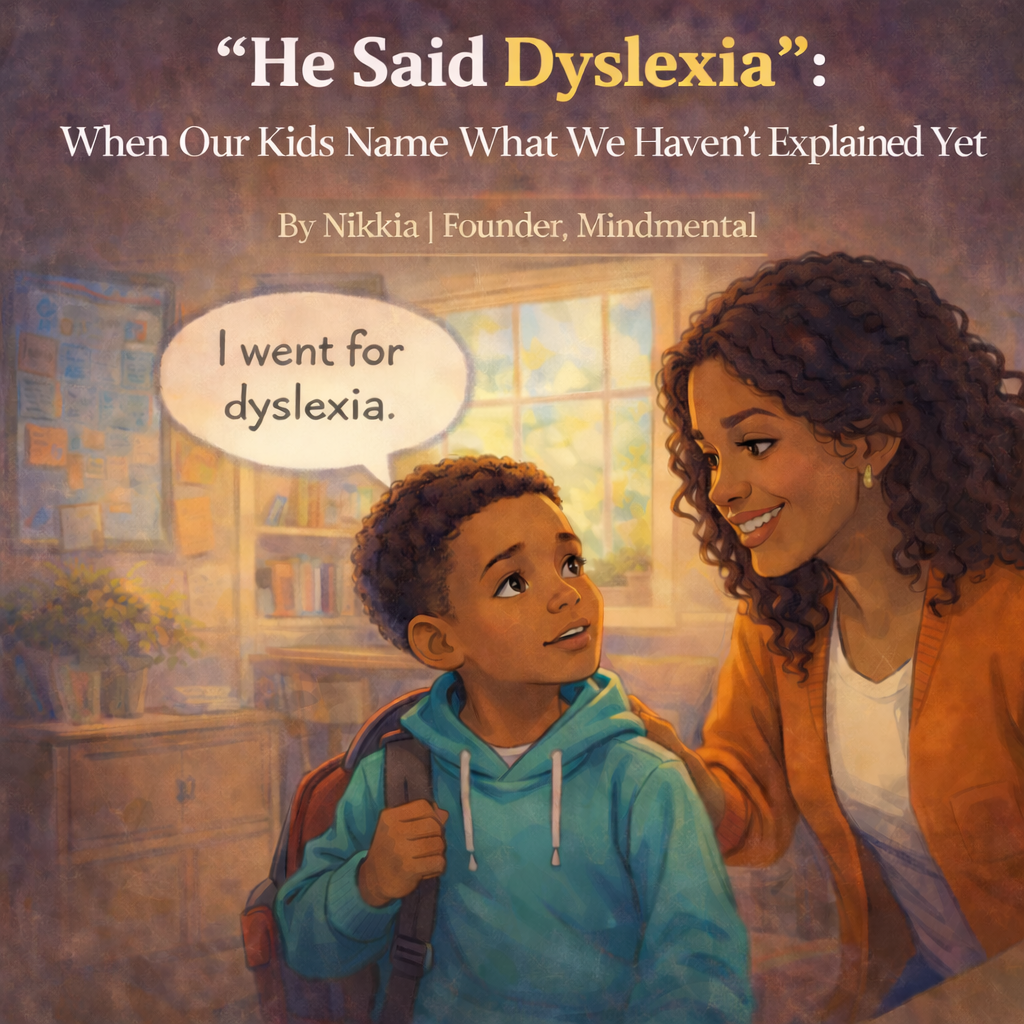
“He Said Dyslexia”: When Our Kids Name What We Haven’t Explained Yet
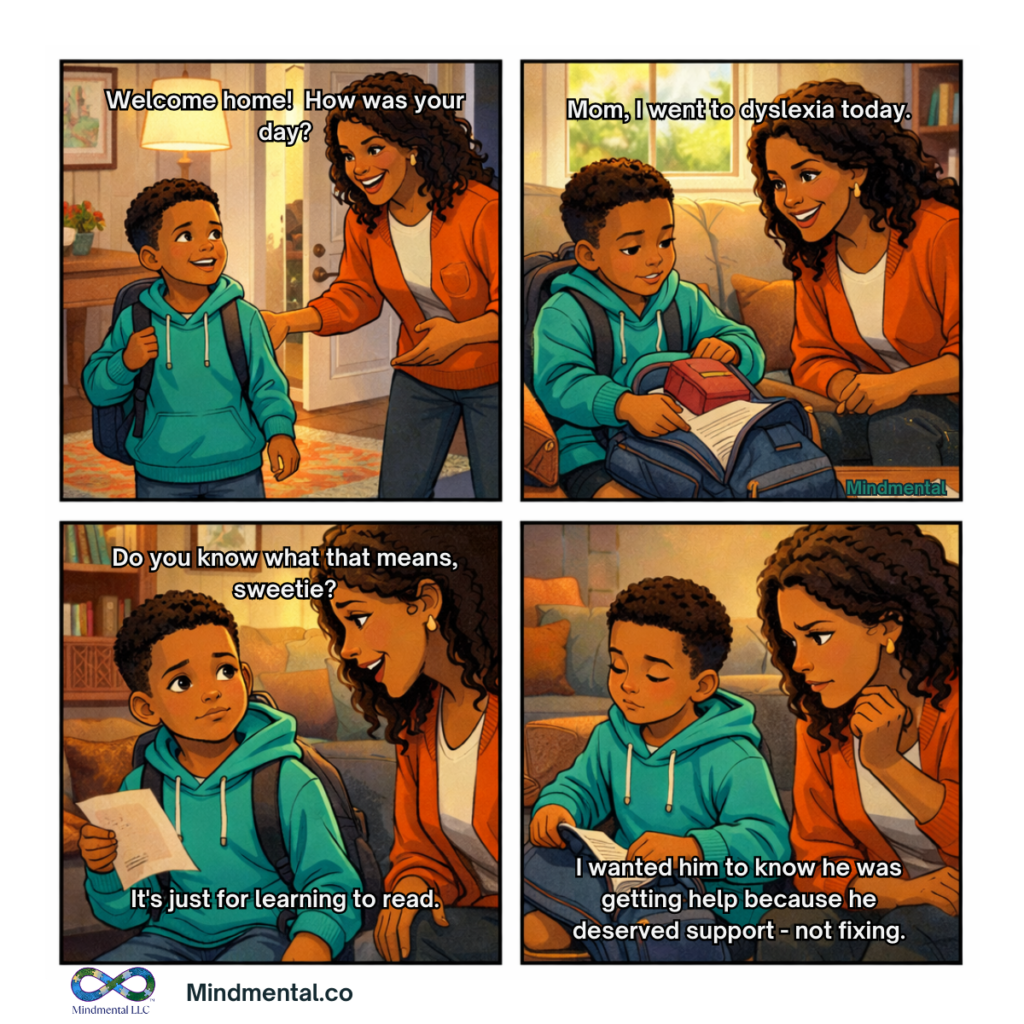
My son usually tells me he went to “the office for reading.” It’s a phrase we’ve both come to accept – gentle, neutral, supportive. But one day, he said something different.
“I went for dyslexia.”
He said it like it was just another word. But for me, it landed like a stone in still water.
We’ve never used that word with him. Not because we’re ashamed. Not because we’re hiding. But because I didn’t want him to feel boxed in by a diagnosis before he even had the language to hold it. I wanted him to feel supported, not labeled. I wanted him to know he was getting help because he’s capable-not flawed. I wanted him to know he was getting help because he deserved support – that he learns differently, and not imply that it was something that needed to be fixed.
So when he said “dyslexia,” I paused.
I asked him, gently, “Do you know what that means?”
He shrugged. “No. Just that it’s for learning to read.”
And that was it. He moved on. But I didn’t.
—
The Quiet Calculus of Parenting
There’s a delicate math we do as parents – especially when our children are neurodivergent or navigating learning differences. We weigh when to name things and when to let them unfold. We try to protect their self-concept while also preparing them for a world that may not always be kind.
I’ve spent years designing trauma-informed resources for families like mine. I know the power of language. I know how early labels can shape identity. And yet, in that moment, I wondered:
• Did I wait too long to explain?
• Did the school overstep by naming it first?
• Did I fail to prepare him for the word he’d eventually hear?
Not a Failure- A Flashlight
But here’s what I’ve come to believe: this wasn’t a failure. It was a flashlight.
It showed me that my son is absorbing more than I realize. That he’s already forming his own understanding of support. That he can hold a word like “dyslexia” without fear-because the experience around it has been safe, consistent, and kind.
It also reminded me that schools and families need to be in sync. If a term like “dyslexia” is going to be introduced, parents should be part of that conversation. Not to control the narrative, but to co-create it.
How We Talk About Support – Without Labels
For families navigating similar moments, here’s what I’ve learned:
• Start with the experience, not the label. “You’re getting help because your brain learns in ways that deserve the right tools.”
• Use metaphors that empower. “Your brain is like a puzzle solver – it just needs a few extra clues.”
• Keep the door open. “If you ever want to know more about how your brain works, I’ll be here to explain.”
And when the word does come – whether from a teacher, a peer, or your child themselves-meet it with curiosity, not panic. Ask what they think it means. Ask how it feels. Then build the meaning together.
This Is Why Mindmental Exists
At Mindmental, we believe in support without shame. In language that uplifts. In tools that help families navigate these moments with grace, clarity, and emotional safety.
Because our kids aren’t defined by their diagnoses. They’re defined by how we show up for them – especially when the words come before we’re ready.
But here’s what I also know:
This moment—when my son casually said “dyslexia”—was tender. Reflective. A gentle reckoning with language and identity.
The story of HOW we got here? That’s different.
That story involves three years of being told to “wait and see.” Three years of professionals choosing comfort over transparency. Three years of watching my bright child’s confidence erode while the system delayed what he desperately needed.
Next week, I’m sharing that story.
It’s heavier. It’s harder. But it’s necessary.
Because military families deserve to know what “wait and see” really means – and what to do when the system says to wait while your child struggles.
📌 Related Posts:
Coming Next Week: “When ‘Wait and See’ Means ‘Wait and Struggle.”
Download: 30 Permission Slips for Exhausted Caregivers – Including permission to trust your instincts when professionals say “wait.”
Resources for Military Families:
Let’s Connect
Your Instincts are Data. Trust Them.
Email: hello@mindmental.co
Newsletter: Sign up to receive monthly
Blog: New posts weekly
Important Note: I am not a licensed therapist or counselor and I do not provide clinical mental health services. Mindmental offers educational resources, organizational tools, and community support based on professional experience and lived expertise. For clinical care, please contact a licensed provider.